
Disaster updates in place and coming this summer.
ECAP Updates: (Emergency commodity assistance program)
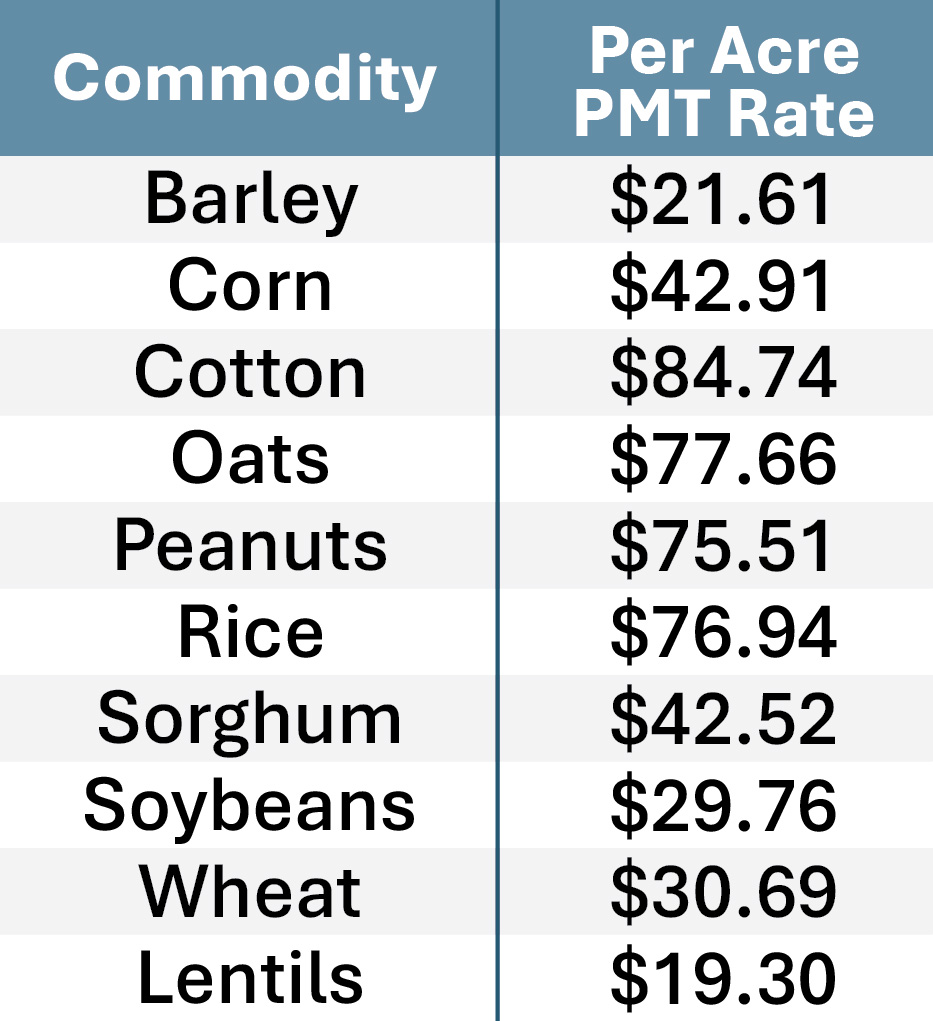
This was simple math, they took the Per acre PMT rate and multiplied it by the number of acres planted for 2024. The initial payment was factored by 85%. To date the program has paid $7.8 million in payments leaving enough in my opinion to pay the remaining 15%. The remaining 15% will be disbursed after the August 15th sign up ends. There is nothing more to do with this program as far asapplications are concerned, this will just be deposited or check mailed whatever you have set up at FSA.
ECAP Payment Chart
MASC (market assistance for Specialty Crops)
The remaining $1.3 Billion in funds will also resume payments this same week after August 15th Sign ups.
Disaster SDRP ‘23/’24 (Supplemental Disaster Relief Program)
This disaster assistance program has been named WHIP (2017) WHIP + (2018-19) ERP (20,21,22) and now SDRP.
This program has $20.78 Billion in funding to deploy for crop years 2023 and 2024 for losses due to extreme weather events including droughts, wildfires, hurricanes, floods, derechos, excessive heat, tornadoes, winter storms, freeze, and excessive moisture. It is important for you to know that the rules and facts on this program will be out the week after the 4th of July, so what I’m saying today is that this is the best understanding I have of the program but is subject to change. I expect the program to pay assistance payments based off of crop insurance indemnities on a PRODUCTION BASIS ONLY. The table shows how I expect the new guarantees to work. If you had a production loss in the years 2023 or 2024 based on 75% example the program will rework that loss at a 92.5% coverage and pay the difference.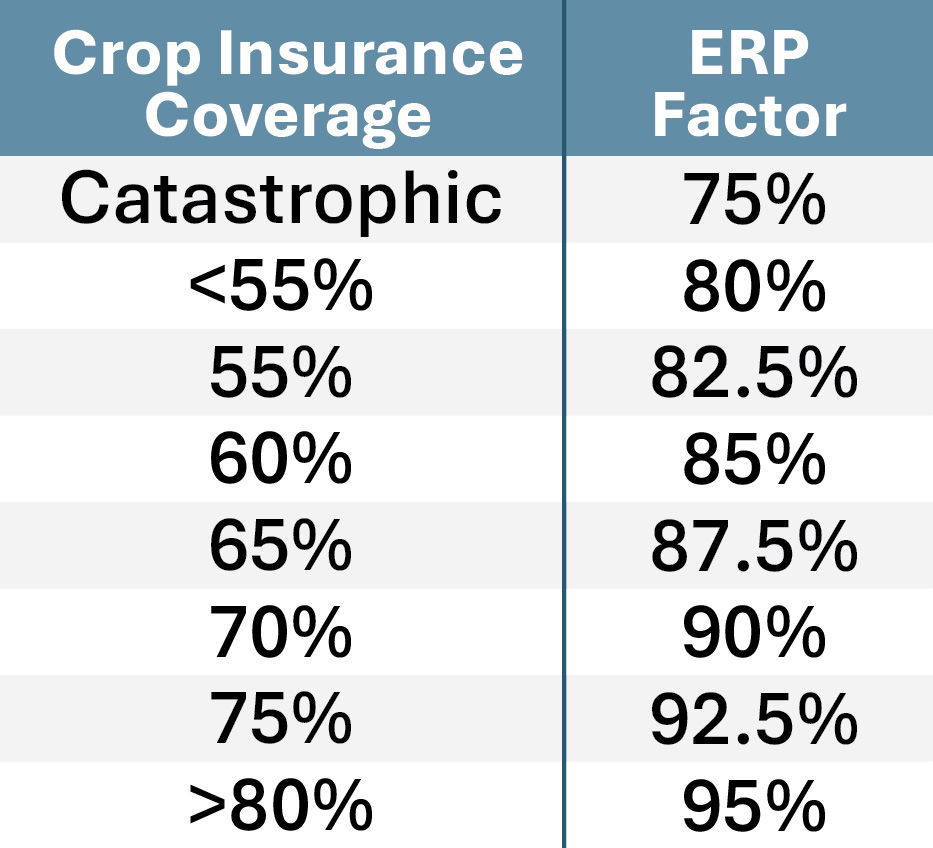
- Prevent plant will be factored at a different rate.
- Pay limits: $125K if less than 75% of AGI from Ag, $250K if greater than 75% of AGI from Ag $900K for specialty crops.
- Applications will be pre-populated from FSA with production to count you will just have to verify the data and sign.
- July 7th target date for sign up for indemnified losses (Losses paid)
- September 15th target date for sign up shallow losses/quality/etc (losses over your initial guarantee of crop insurance but now fall short with the new guarantee
- I expect all payments to be factored in the 50%-60% range.
- July 7th target date for sign up for indemnified losses (Losses paid)
- September 15th target date for sign up shallow losses/quality/etc (losses over your initial guarantee of crop insurance but now fall short with the new guarantee
- I expect all payments to be factored in the 50%-60% range.
ND State Legislature storm disaster assistance:
Producers who experience livestock deaths in excess of normal mortality or sell injured livestock at a reduced price may be eligible for the Livestock Indemnity Program (LIP). To participate in LIP, producers will have to provide acceptable documentation of death losses or evidence of reduced sales resulting from an eligible adverse weather event and must submit a notice of loss and program payment application to the USDA Farm Service Agency (FSA) no later than March 2, 2026, for 2025 calendar year losses. Livestock producers who experience losses related to tornadoes should check with their local FSA office for LIP eligibility criteria.
Meanwhile, the Emergency Assistance for Livestock, Honeybees, and Farm-Raised Fish Program (ELAP) provides eligible producers with compensation for feed and grazing losses. For ELAP, producers are required to complete a notice of loss and submit a payment application to their local FSA office no later than the annual program application deadline, March 2, 2026, for 2025 calendar year losses.
Additionally, eligible orchardists and nursery tree growers may be eligible for cost-share assistance through the Tree Assistance Program (TAP) to replant or rehabilitate eligible trees, bushes or vines. TAP complements the Noninsured Crop Disaster Assistance Program (NAP) or crop insurance coverage, which covers the crop but not the plants or trees in all cases. For TAP, a program application must be filed within 90 days of the disaster event or the date when the loss of the trees, bushes or vines is apparent.
“Impacted producers should timely report all crop, livestock and farm infrastructure damages and losses to their local FSA county office as soon as possible,” said Brad Thykeson, State Executive Director for FSA in North Dakota. “As you evaluate your operation, take time to gather important documents you will need to get assistance, including farm records, herd inventory, receipts and pictures of damages or losses.”
FSA also offers a variety of direct and guaranteed farm loans, including operating and emergency farm loans, to producers unable to secure commercial financing. Producers in counties with a primary or contiguous disaster designation may be eligible for low interest emergency loans to help them recover from production and physical losses. Loans can help producers replace essential property, purchase inputs like livestock, equipment, feed and seed, cover family living expenses or refinance farm-related debts and other needs.
Additionally, FSA offers several loan servicing options available for borrowers who are unable to make scheduled payments on their farm loan programs debt to the agency because of reasons beyond their control.
The Farm Storage Facility Loan Program (FSFL) provides low-interest financing so producers can build, repair, replace or upgrade facilities to store commodities. Loan terms vary from three to 12 years. Producers who incurred damage to or loss of their equipment or infrastructure funded by the FSFL program should contact their insurance agent and their local USDA Service Center. Producers in need of on-farm storage should also contact USDA.
We are currently dissecting the “Beautiful bill” for all the crop insurance provisions and will have an update for you if and when it passes the house.